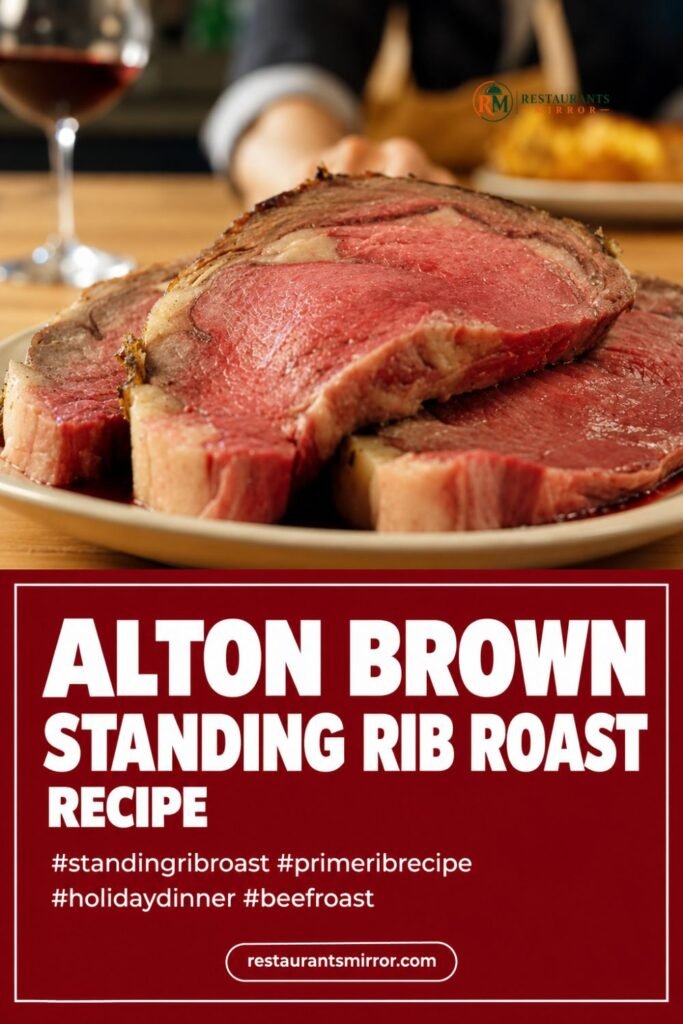
Alton Brown Standing Rib Roast Recipe
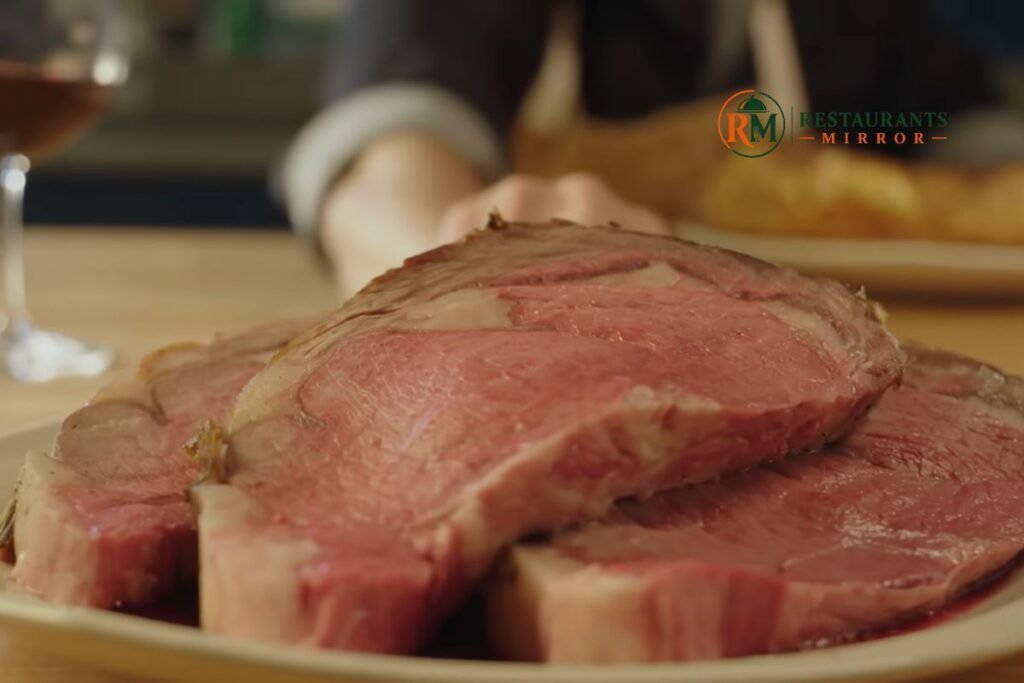
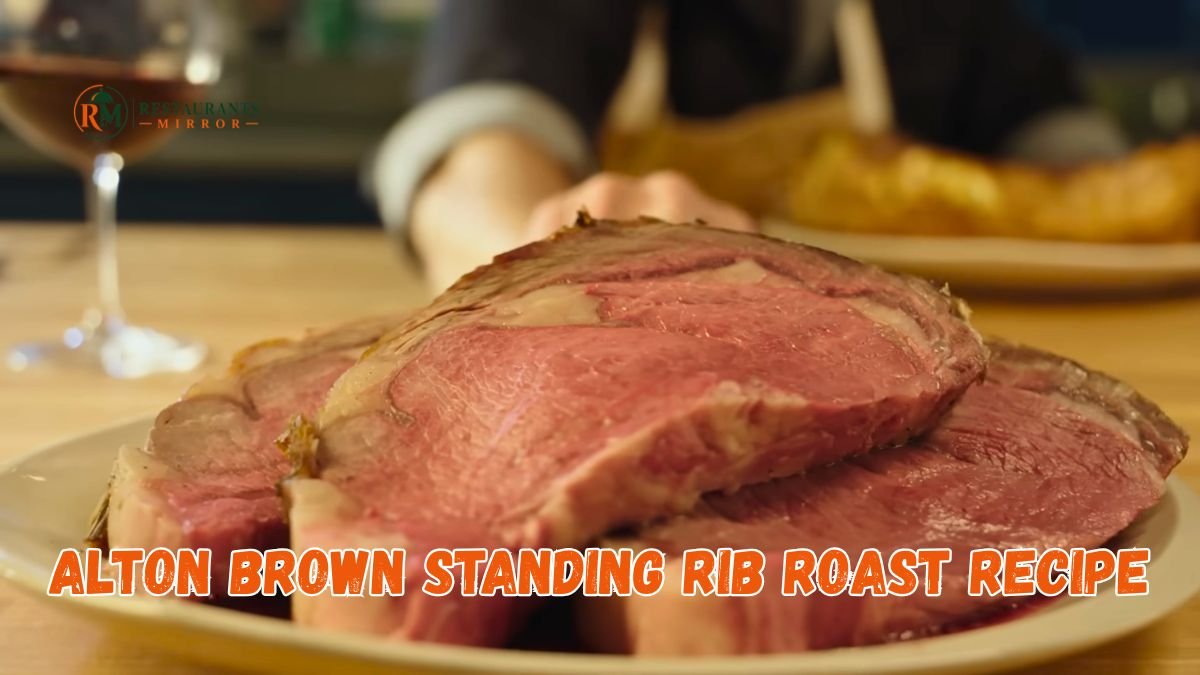
Holiday dinners have become a little easier to plan since we started making this Alton Brown Standing Rib Roast Recipe. It delivers a beautifully browned crust, tender slices, and the kind of centerpiece that makes any special meal feel a little more memorable.
The method is straightforward and takes the guesswork out of cooking a rib roast. With the right temperature and a little attention to the timing, you can get a flavorful roast with a perfectly cooked center and plenty of rich, savory flavor.
What Makes This Reverse-Sear Method Work
Most rib roast recipes tell you to season it, roast it hot, and pull it when a thermometer hits your target. This one adds a drying stage first. The meat sits uncovered in the fridge for several days before it ever sees an oven.
That drying step matters more than people expect. A wet surface steams instead of browning, so a dry one sears faster and cracks instead of going soft. It’s a small change with a big payoff on texture.
This is also a reverse sear, not a straight roast. The beef climbs slowly at a low temperature first, then gets blasted with high heat at the very end just to build a crust. That order keeps the inside pink from the bone almost to the fat cap.
I tested it both ways one year, roasting a second small roast hot the whole time as a control. The reverse sear version had almost no gray band under the crust. The hot-roasted one had nearly half an inch of overcooked meat before you hit pink.
Ingredients for Alton Brown Standing Rib Roast Recipe
1 (3 to 4 bone) standing rib roast, choice grade: This is the entire dish, so buy the best one your store carries. I ask the butcher counter at my local grocery to leave the fat cap intact rather than trimming it down.
2 teaspoons kosher salt per bone (about 8 teaspoons total): Kosher salt clings to the meat’s surface better than table salt because of its coarse, flat grain shape. I reach for Diamond Crystal specifically, since it’s less salty by volume than other brands and harder to overdo.
If you only have table salt, cut the amount by roughly half, since fine grains pack in tighter and taste saltier per teaspoon.
2 tablespoons freshly ground black pepper: Fresh pepper carries oils that fade fast once ground, so pre-ground stuff tastes flat by comparison. I grind mine in a small hand mill that used to be my coffee grinder, about 25 cranks per batch.
4 tablespoons beef tallow or rendered beef fat, divided: Tallow rubbed into the meat before seasoning helps the salt and pepper stick and adds a faint richness to the crust. Bacon fat works in a pinch, though it shifts the flavor toward smoke instead of straight beef.
6 feet cheesecloth: This wraps the roast during its dry-out period in the fridge, letting air reach the surface without drying it unevenly. Most kitchen supply stores carry it near the canning supplies.
4 large eggs: Eggs give the Yorkshire pudding its structure and help it puff dramatically in the hot skillet. Room temperature eggs whip up lighter than cold ones straight from the fridge.
2 cups whole milk: Whole milk adds fat that keeps the pudding tender instead of rubbery. Skim milk will still puff, but the inside comes out drier and slightly chewy.
1½ teaspoons kosher salt (for the batter): This seasons the pudding itself, which otherwise tastes like a plain, eggy pancake. Don’t skip it just because you already salted the roast.
280 grams all-purpose flour: Weighing the flour instead of scooping it keeps the batter consistent every single time. A kitchen scale removes the guesswork that measuring cups introduce with packed flour.
Equipment That Makes the Roast Easier
- Cheesecloth: wraps the roast for drying
- Cooling rack and sheet pan: elevates roast in fridge
- Kitchen twine: ties roast for standing storage
- Digital probe thermometer: tracks internal temperature precisely
- Small pepper mill: freshly grinds whole peppercorns
- 12-inch cast iron skillet: bakes the Yorkshire pudding
- Stick blender or hand mixer: blends the pudding batter
- Turkey baster: collects drippings from the pan
How to Make Alton Brown Standing Rib Roast
1. Dry the Roast: Cut cheesecloth into two 3-foot pieces. Wrap the roast in the first piece, rotate it 90 degrees, then wrap it in the second. Tie with twine.
2. Chill for Four to Five Days: Set the wrapped roast on a rack over a sheet pan, standing it up on one end if space allows. Refrigerate uncovered for 4 to 5 days.
The surface should feel dry and slightly tacky, almost like paper, by the last day. If it still feels wet after four days, give it one more day.
3. Season the Roast: About 90 minutes before cooking, unwrap the roast. Rub 2 tablespoons of tallow into the surface, then pack on the salt and pepper mixture, pressing it into the meat firmly.
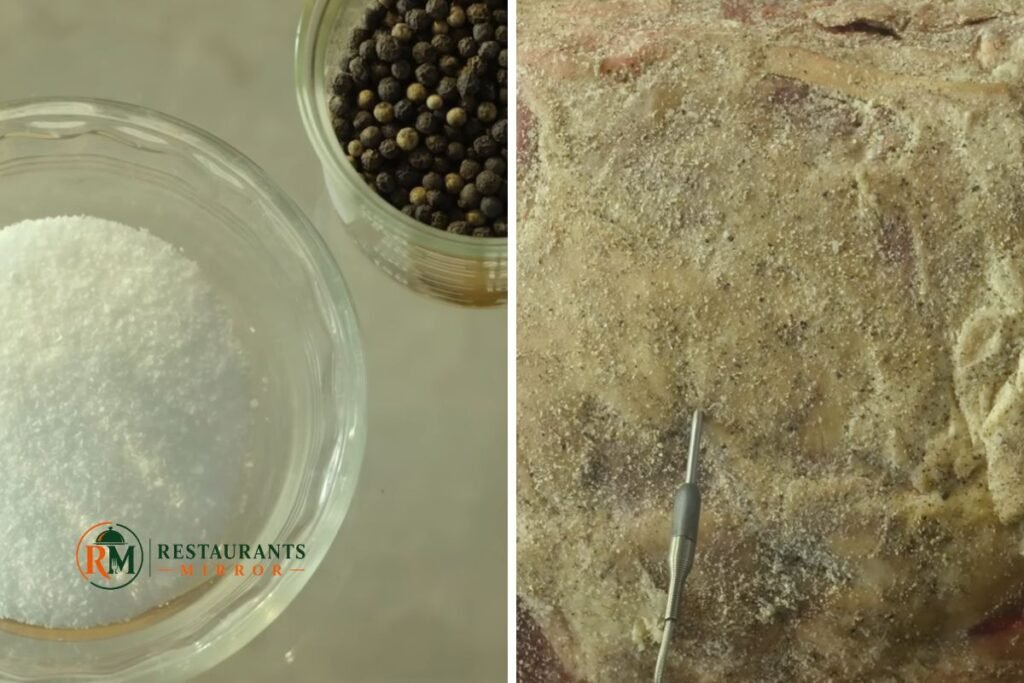
4. Insert the Thermometer: Set your probe alarm to 118°F. Insert it horizontally through the fat cap, angling up about an inch into the thickest part of the eye muscle, at least 3 inches deep.
5. Roast Low and Slow: Place the roast on a rack in a bottom-third oven rack position. Roast at 250°F, allowing roughly one hour per rib bone until the alarm hits 118°F.
I once pulled a roast 15 minutes early because I assumed the timing math was close enough. The center read 106°F, well short of target, so trust the thermometer over the clock.
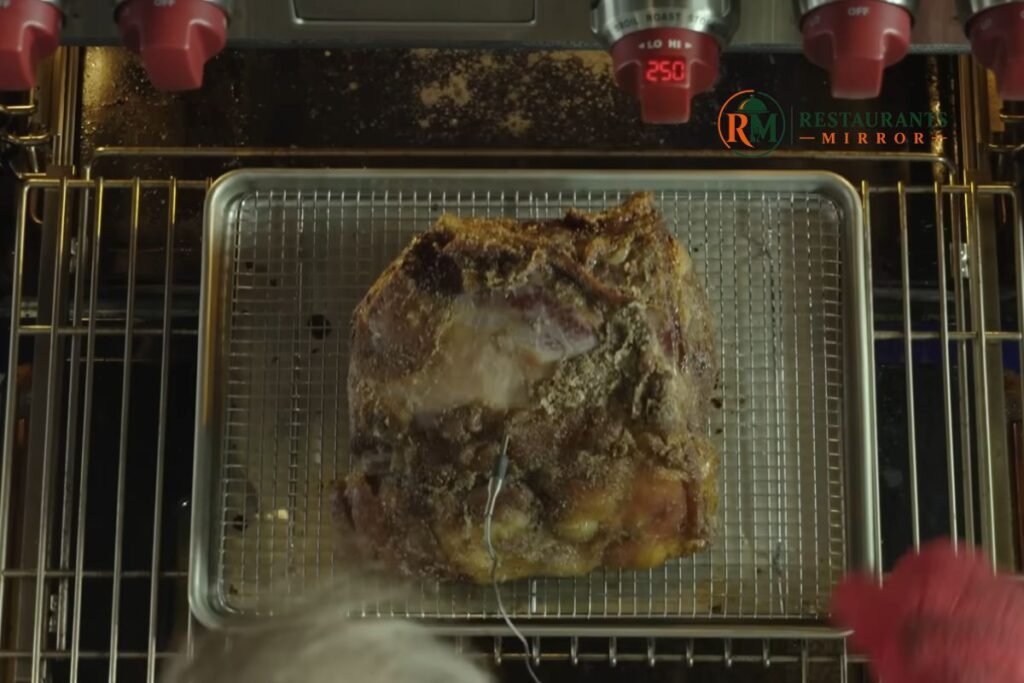
6. Rest While Making the Pudding: Remove the roast and set it in a warm spot uncovered, leaving the probe in place. Do not tent it with foil, since that traps steam and softens the crust you’re about to build.
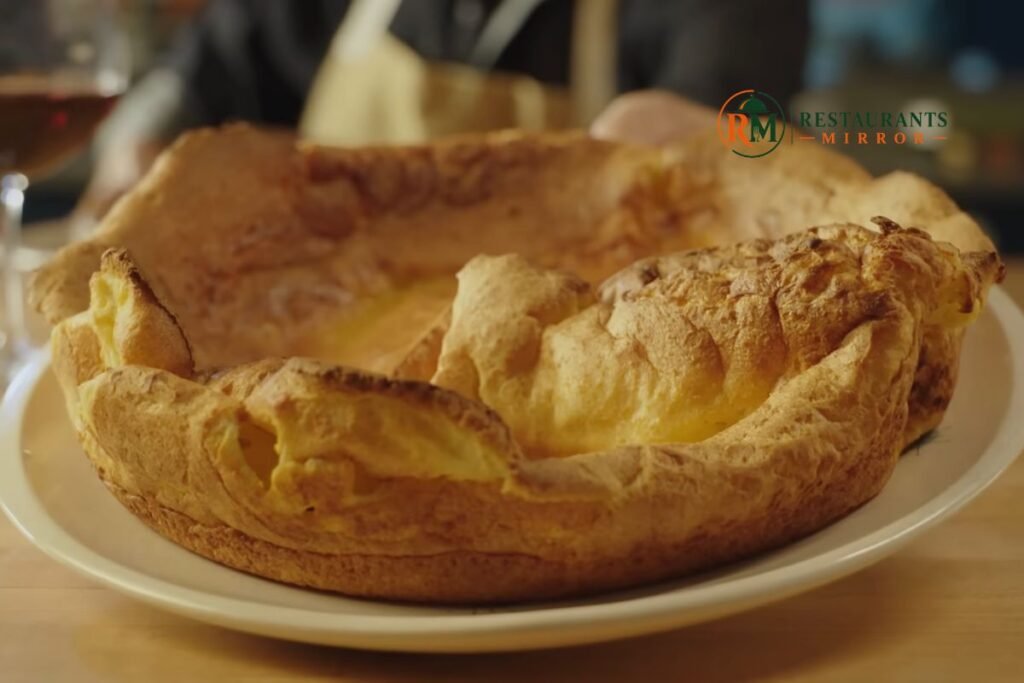
7. Bake the Yorkshire Pudding: Heat the empty skillet in a 400°F oven. Mix 4 tablespoons of pan drippings into the batter while blending, then add 2 tablespoons directly to the hot skillet.
Pour the batter in fast and return the skillet to the oven. Bake about 30 minutes until it puffs well above the rim and turns deep golden brown.
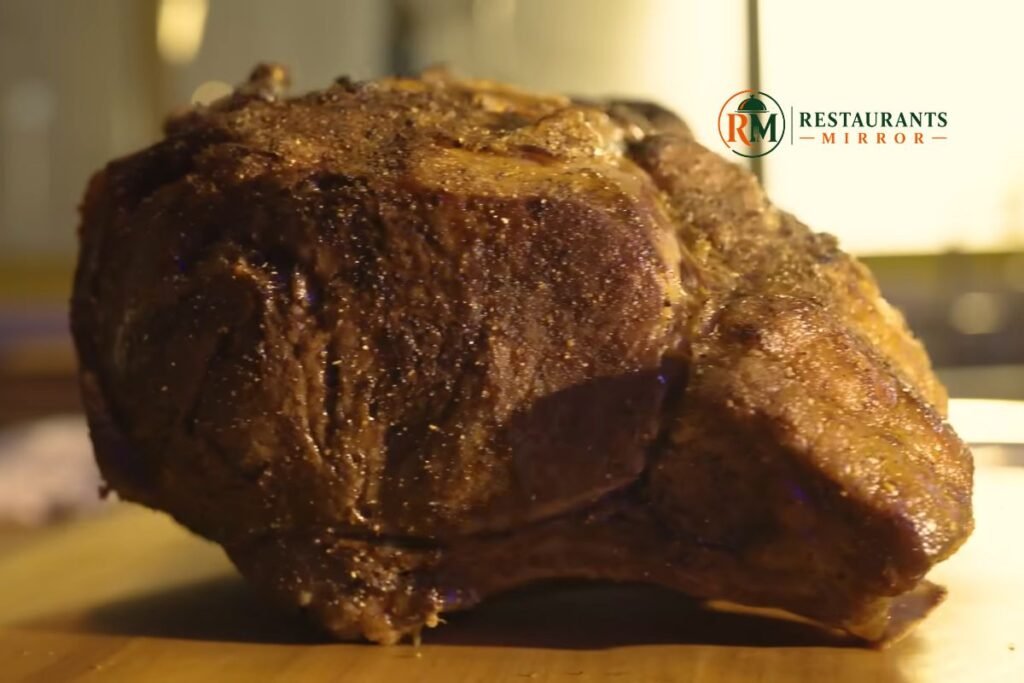
8. Sear the Roast: Pull the probe from the meat and note the final resting temperature. Crank the oven to 550°F and roast the beef for 10 minutes to build a dark, cracked crust.
Expect real smoke here, so turn on your range hood or crack a window. If the crust looks pale after 10 minutes, give it another 2 to 3 minutes and watch closely.
My Best Tips for a Perfect Alton Brown Standing Rib Roast
1. Uneven Crust: If one side browns faster during the final sear, rotate the pan halfway through the 10 minutes.
2. Overcooked Center: If the roast reads above 130°F after resting, pull the probe earlier next time, closer to 112°F, to account for carryover.
3. Salt Not Sticking: If seasoning falls off during cooking, the surface probably wasn’t dry enough. Extend the fridge dry time by a full day.
4. Pudding Won’t Puff: A cold skillet kills the rise instantly. Always let the skillet fully preheat before pouring in batter.
5. Weak Pan Drippings: If drippings look watery instead of rich, add an extra tablespoon of tallow before roasting.
6. Smoke Alarm Going Off: Crack a window or run your range hood on high before starting the final 550°F sear.
Easy Ways to Change the Flavor
Garlic and Rosemary Crust: Press minced garlic and chopped rosemary into the tallow layer before adding salt and pepper. This adds a sharper, herbal edge and works well for a smaller weeknight-style dinner for four.
Horseradish Butter Finish: Whip prepared horseradish into softened butter and serve it melting over each slice. This cuts the richness of the fat cap and pairs naturally with the classic sandwich version of leftovers.
Smoked Version: Finish the low roast in a smoker set to 250°F instead of the oven for the first stage. This adds a mild smoke layer without changing the final sear step.
Coffee and Chili Rub: Blend finely ground coffee with chili powder into the pepper mix. This gives the crust a darker, slightly bitter edge that plays well with Chocolate Yogurt.
Herb Butter Basted Finish: Baste the roast with garlic herb butter during the final sear instead of using bare fat. This adds a greener, more fragrant crust for a smaller holiday gathering.
What to Serve With Alton Brown Standing Rib Roast
Yorkshire pudding is the built-in partner here, torn into pieces and used to scoop up slices of beef with the drippings still clinging to it.
A sharp green salad with a mustard vinaigrette balances the fat nicely, especially something with radicchio or arugula that can stand up to the richness.
Horseradish sauce belongs on the table no matter what else you serve, since the sharpness cuts through the beef fat better than almost anything else.
For a full meal, pair the roast with roasted parsnips, the pudding, and a simple salad, then let the leftover fat drippings double as gravy over everything.
How to Store, Freeze, and Reheat Leftovers
Leftover roast keeps well in the refrigerator for up to 4 days when wrapped tightly in foil or stored in an airtight container. Slice only what you need and keep the rest whole to slow moisture loss.
For longer storage, freeze slices flat in a freezer bag with the air pressed out, good for up to 3 months. Thaw overnight in the fridge before reheating.
Reheat gently in a low oven around 250°F, covered, to avoid drying the meat further past its already-cooked state. A quick pan sear at the end can rebuild some crust texture lost during storage.
Creative Ways to Use Leftover Roast
Leftovers from the first 2 days work best sliced thin for a classic beef sandwich with horseradish sauce and any leftover Yorkshire pudding torn open like bread.
Beyond that window, chop the meat and toss it into a beef hash with potatoes and onions, which hides any slight texture change from reheating.
Leftover drippings, if you saved them, make a fast pan gravy for either version, spooned over the hash or the sandwich filling.
Frequently Asked Questions
1. Can I skip the multi-day drying step?
You can, but the crust will be softer and less crackly, since a wet surface steams instead of browning during the final sear.
2. What if I don’t have cheesecloth?
Leave the roast uncovered on a rack in the fridge instead. It works, just slightly less evenly than a wrapped roast.
3. Can I use prime grade instead of choice?
Yes. Prime carries more marbling, so expect a slightly richer texture, though the cooking method stays exactly the same.
4. Do I need a specific thermometer brand?
No, any digital probe thermometer with an alarm function works fine, as long as it reads accurately at low temperatures.
5. Can I make the Yorkshire pudding batter ahead?
Yes, mix it and refrigerate up to a day ahead, but let it sit at room temperature before adding hot drippings.
6. Why did my Yorkshire pudding deflate right away?
That’s normal. It puffs dramatically in the oven, then settles within a minute or two once removed from heat.
7. Can I cook a smaller two-bone roast this way?
Yes, just shorten the low roast time proportionally, since the one-hour-per-bone estimate still applies loosely.
8. Is the fat cap necessary?
Yes, it protects the meat during the long low roast and renders down, basting the top of the roast naturally.
9. How spicy is the pepper crust?
Not spicy at all. Black pepper here adds sharpness and aroma, not heat, especially freshly ground.
10. Can I prep the roast the morning of instead of days ahead?
You can season and cook it same-day, but skip the surface-drying benefit entirely, resulting in a softer crust.
Alton Brown Standing Rib Roast Recipe
Ingredients
Equipment
Method
- Cut cheesecloth into two 3-foot pieces. Wrap the roast in the first piece, rotate 90 degrees, then wrap in the second. Tie with twine.
- Set the wrapped roast on a rack over a sheet pan and refrigerate uncovered for 4 to 5 days.
- Unwrap the roast about 90 minutes before cooking. Rub 2 tablespoons of tallow into the surface, then pack on salt and pepper.
- Insert a probe thermometer horizontally through the fat cap, angling up into the eye muscle at least 3 inches deep. Set the alarm to 118°F.
- Roast at 250°F on a bottom-third rack for roughly one hour per rib bone, until the alarm sounds.
- Remove the roast and rest it uncovered in a warm spot, leaving the probe in place.
- Heat an empty skillet in a 400°F oven. Mix 4 tablespoons of pan drippings into the pudding batter, then add 2 tablespoons to the hot skillet.
- Pour in the batter and bake about 30 minutes until puffed and golden brown.
- Pull the probe from the meat, raise the oven to 550°F, and roast the beef for 10 minutes to build a dark crust.
Notes
This Alton Brown Standing Rib Roast Recipe is a classic choice for a holiday dinner or special occasion. The roast develops a flavorful, browned crust while the inside stays tender and juicy, making it an impressive centerpiece for the table.