Bojangles Fried Chicken Recipe
My grandfather kept a cast-iron skillet hanging on a nail by his back door, and it only ever came down for fried chicken. That skillet is where I first learned the sound hot oil makes right before chicken goes in.
I started chasing this Bojangles Fried Chicken Recipe after a road trip through North Carolina left me thinking about it for weeks afterward. My first attempt at home used cold chicken straight from the fridge, and the coating never crisped properly.
My youngest brother still requests this specific recipe for his birthday dinner every year, over anything involving cake or ice cream.
It’s the dish that shows up at nearly every gathering in my family now, from graduation parties to a random Tuesday when nobody feels like cooking.

Why This Fried Chicken Recipe Gets Requested So Often
The draw is the contrast: a crackling, seasoned crust giving way to meat that stays juicy underneath. That balance is what separates good fried chicken from average fried chicken.
A buttermilk marinade does most of the work on tenderness. The acid in buttermilk breaks down the chicken slightly, which is why the meat stays soft even after frying.
The spice blend matters just as much as the technique. Paprika, garlic powder, and onion powder layered together give a rounder flavor than any single seasoning could manage alone.
Ingredients for Bojangles Fried Chicken Recipe
2 pounds chicken breast or thighs: This is the main protein in the dish. Chicken tenders or drumsticks work as a substitute. Pat the chicken dry with paper towels before marinating to remove excess surface moisture.
1 cup all-purpose flour: This forms the crispy coating and gives the seasoning something to cling to. Sift it first to remove lumps for a more even crust.
2 tablespoons paprika: This adds a smoky, slightly sweet backbone to the coating. Smoked paprika works well in its place for a deeper, more savory flavor.
1 teaspoon garlic powder: This brings a savory note without overwhelming the other spices. A little goes a long way, so measure carefully.
1 teaspoon onion powder: This rounds out the savory profile alongside the garlic powder. Store it in an airtight container so it doesn’t lose potency over time.
1 teaspoon salt: This draws out flavor in both the marinade and the coating. Kosher or sea salt both work well here.
½ teaspoon black pepper: This adds a sharp background note. Cayenne can stand in for extra heat if you want a spicier finish.
1 cup buttermilk: This tenderizes the chicken and helps the coating adhere. Plain yogurt thinned with a splash of milk works as a substitute if you’re out of buttermilk.
½ cup vegetable oil: This is what fries the chicken to a golden crisp. Peanut oil works well too and holds up at high heat without smoking early.
¼ cup water: This thins the marinade slightly, helping the coating stick more evenly. Chicken broth can stand in for a little extra flavor.
Equipment to Make Fried Chicken
- Large bowl: for marinating and mixing the coating
- Whisk: to combine the marinade evenly
- Skillet: for frying the chicken
- Thermometer: confirms correct oil temperature
- Tongs: for turning and removing the chicken
- Paper towels: to drain excess oil
Instructions to Make Bojangles Fried Chicken
Step 1: Prepare the Marinade
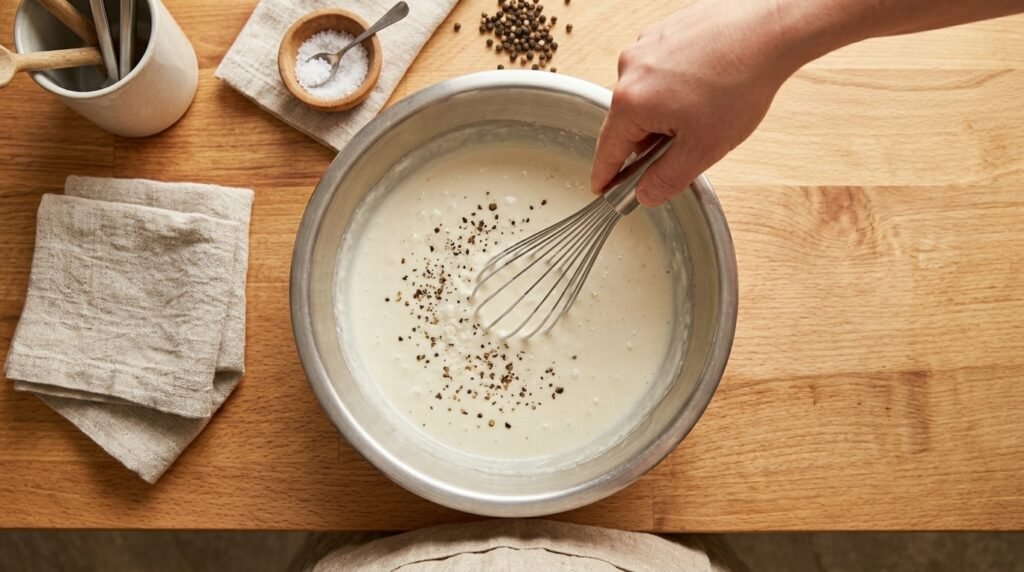
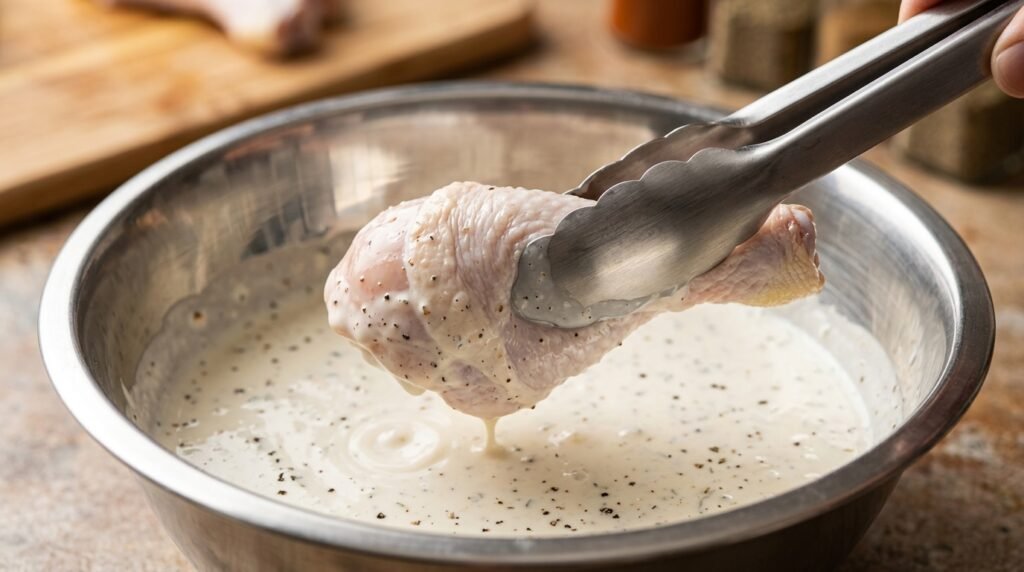
Start by making the marinade. In a large bowl, whisk together buttermilk, salt, and pepper. I recommend using a stainless steel bowl to keep the ingredients cold. Make sure to whisk the buttermilk well so that the seasonings are mixed evenly. As you whisk, you’ll see the mixture thicken, and the flavors become stronger.
Step 2: Add the Chicken to the Marinade
Next, add the chicken to the marinade, ensuring each piece is fully coated. Use tongs to place the chicken in the marinade, being careful not to stick. Make sure the chicken is completely submerged; this will help the flavor soak in. As the chicken marinates, you’ll notice it getting more tender and flavorful.
Step 3: Mix the Coating
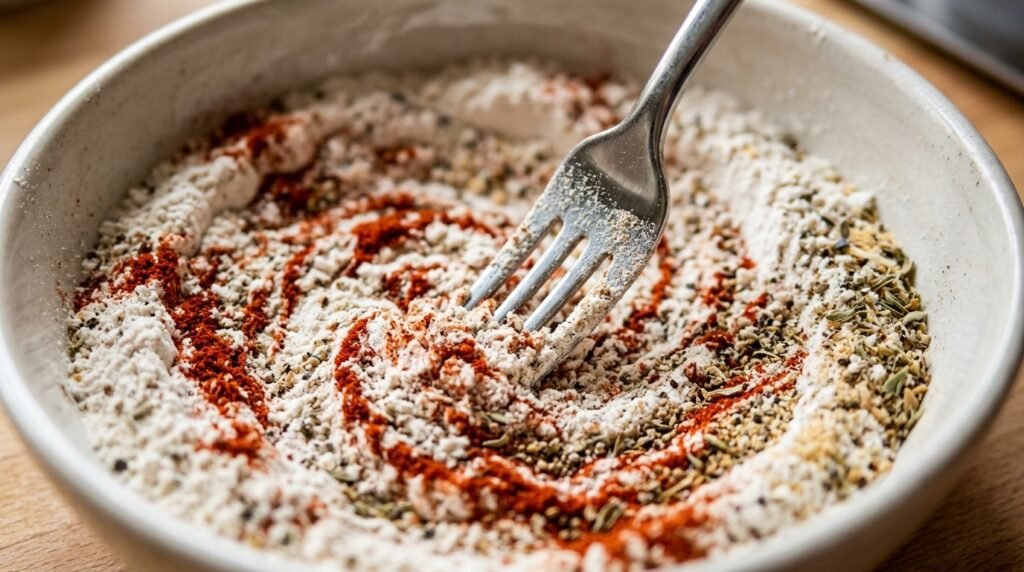
In a separate bowl, mix the flour, paprika, garlic powder, and onion powder. A fork works well for this, as it helps break up lumps and combine the ingredients. Ensure the coating is well mixed to spread the seasonings evenly. As you mix, you’ll notice the coating becoming aromatic.
Step 4: Dredge the Chicken in the Coating
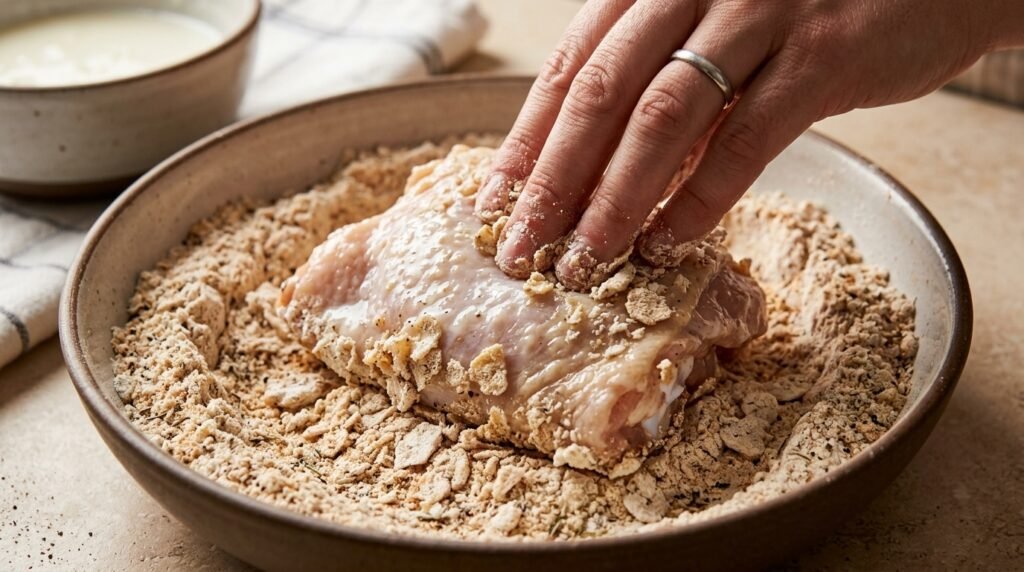
After marinating, dredge the chicken in the coating, making sure each piece is fully covered. Again, use tongs to place the chicken in the coating to prevent sticking. The chicken must be completely coated, as this will help create a crispy crust. As the chicken sits in the coating, it will become more adherent.
Step 5: Fry the Chicken
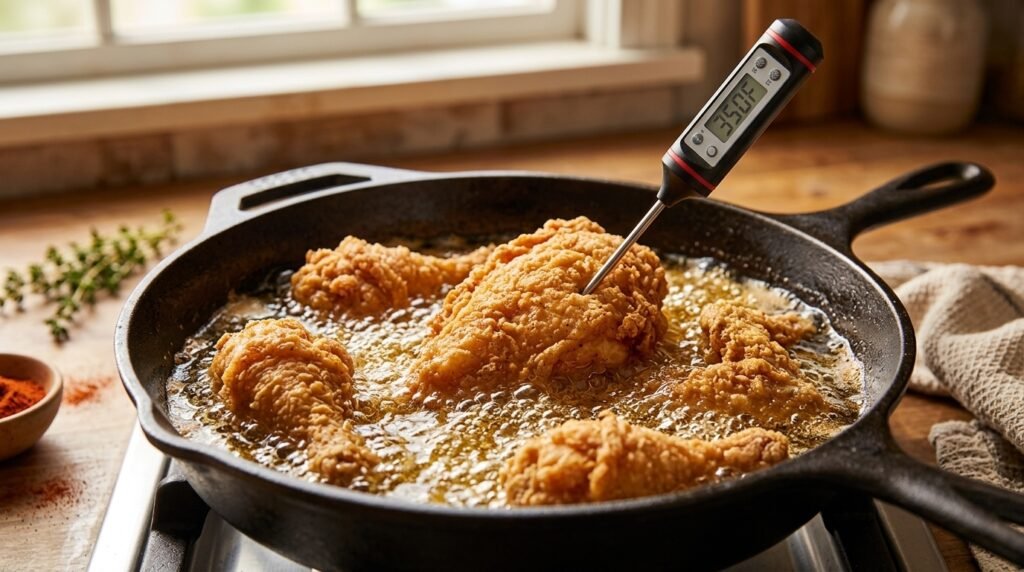
To fry the chicken, heat vegetable oil in a large skillet over medium-high heat. Using a thermometer can help ensure the oil is at the right temperature for a crispy exterior. Make sure the oil is hot so the chicken cooks evenly. As the chicken fries, the outside will become crispy and golden, while the inside remains juicy.
Step 6: Drain Excess Oil
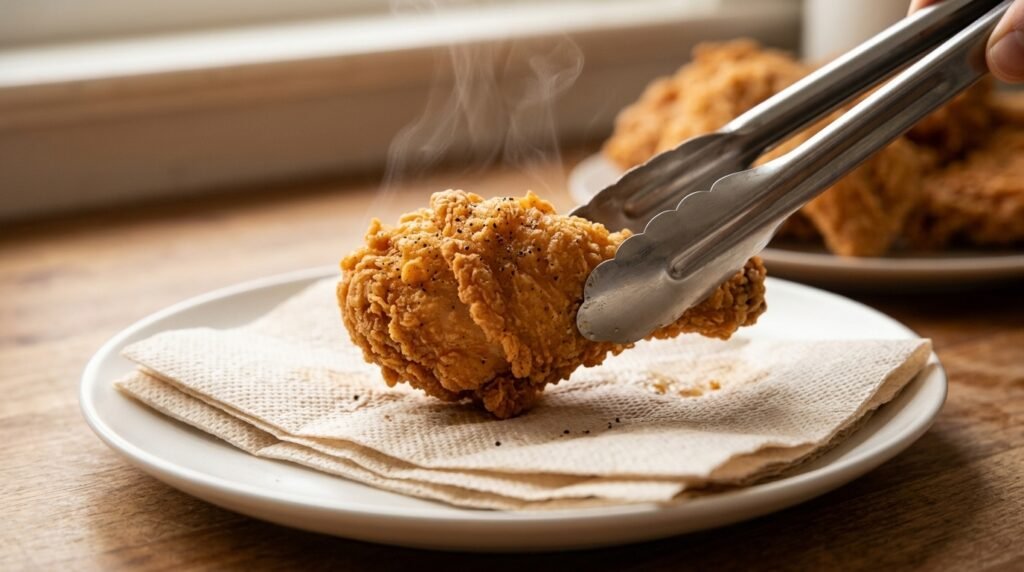
Once the chicken is cooked, remove it from the oil and place it on a plate lined with paper towels to drain excess oil. Use tongs to transfer the chicken gently, preventing sticking. Ensure the chicken is well-drained to keep the exterior crispy. As it sits on the plate, the outside will continue to crisp up, and the inside will stay tender.
How to Fix Common Fried Chicken Problems
1. Crust Turned Out Soggy: The oil wasn’t hot enough. Confirm 350°F with a thermometer before adding the chicken.
2. Chicken Cooked Unevenly: Pieces were different sizes. Pound thicker cuts to an even thickness before marinating.
3. Coating Fell Off During Frying: The chicken wasn’t dredged firmly enough. Press the flour mixture onto each piece before it goes into the oil.
4. Chicken Turned Out Dry: It fried a minute or two too long. Pull it as soon as it reaches 165°F internally.
5. Chicken Tastes Greasy: It wasn’t drained properly. Rest it on paper towels immediately after frying, not on a plate directly.
6. Chicken Sticks to the Skillet: The oil wasn’t hot enough before adding the chicken, or the pan needs more oil overall.
Delicious Variations to Try at Home
Spicy Version: Add a few drops of hot sauce to the marinade and diced jalapeño to the coating. Good for a game-day spread with extra heat.
Lemon Pepper Version: Add lemon zest and juice to the marinade for a brighter, tangier finish. Works well for a lighter summer dinner.
Garlic Parmesan Version: Mix grated parmesan and minced garlic into the coating for a richer, more savory crust.
Korean-Style Version: Stir gochujang and soy sauce into the marinade, then finish with sesame seeds and chopped green onion.
Best Side Dishes to Serve with Bojangles Fried Chicken
Mashed potatoes, collard greens, and coleslaw are all classic pairings that round out a full Southern-style plate. Warm biscuits or cornbread work well for soaking up any extra juices.
Sweet tea is the natural drink pairing here, and fresh cucumber or carrot sticks on the side help balance the richness of the meal.
Storing, Freezing & Reusing
Store cooked chicken in an airtight container in the fridge for up to 3 days, kept at 40°F or below for food safety.
Freeze cooked chicken for up to 2 months in a labeled freezer bag. Reheat in a 375°F oven for about 15 minutes to help the crust re-crisp instead of turning soggy in the microwave.
Leftovers from the last 2 to 3 days work well chopped into a chicken sandwich with pickles and a drizzle of ranch or honey mustard.
You can also dice leftover chicken into a quick salad topper or fold it into a waffle sandwich for a fast, different meal from the same batch.
Alternative Cooking Methods
Pan-frying in a skillet is the primary method here and gives the closest match to the restaurant’s crispy, deep-fried texture.
Oven-baking works as a lower-mess option. Bake breaded chicken at 425°F for about 35 minutes, flipping halfway, though the crust will be noticeably less crisp than fried.
An air fryer gives a middle-ground result. Cook at 375°F for about 20 minutes, flipping halfway, spraying the coating lightly with oil first to help it brown.
Bojangles Fried Chicken Recipe FAQs
1. Can I use chicken tenders instead of breasts or thighs?
Yes, chicken tenders work well and cook slightly faster, so start checking for doneness a couple minutes earlier.
2. How long should I marinate the chicken?
At least 1 hour, though overnight in the fridge gives the most tender, flavorful result.
3. Can I make this in an air fryer instead of frying?
Yes, cook at 375°F for about 20 minutes, flipping halfway, though the crust will be less crisp than pan-frying.
4. Why did my coating fall off during frying?
It likely wasn’t pressed on firmly enough. Dredge each piece thoroughly and press the flour mixture into the chicken.
5. Can I make this ahead of time for a party?
Yes, fry it a few hours ahead and reheat in a 375°F oven for 15 minutes to bring back the crisp texture.
6. What oil works best for frying this chicken?
Peanut or vegetable oil both hold up well at frying temperature without smoking too early.
How do I know the chicken is fully cooked?
Check with a thermometer for an internal temperature of 165°F at the thickest part of the piece.
7. Can I double this recipe for a larger group?
Yes, double every ingredient and fry in batches so the pan isn’t overcrowded, which can lower the oil temperature.
8. Is this recipe very spicy?
Not as written. Add hot sauce to the marinade or cayenne to the coating if you want more heat.
Bojangles Fried Chicken Recipe
Ingredients
Method
- Start by making the marinade. In a large bowl, whisk together buttermilk, salt, and pepper. I recommend using a stainless steel bowl to keep the ingredients cold. Make sure to whisk the buttermilk well so that the seasonings are mixed evenly. As you whisk, you’ll see the mixture thicken, and the flavors become stronger.
- Next, add the chicken to the marinade, ensuring each piece is fully coated. Use tongs to place the chicken in the marinade, being careful not to stick. Make sure the chicken is completely submerged; this will help the flavor soak in. As the chicken marinates, you’ll notice it getting more tender and flavorful.
- In a separate bowl, mix the flour, paprika, garlic powder, and onion powder. A fork works well for this, as it helps break up lumps and combine the ingredients. Ensure the coating is well mixed to spread the seasonings evenly. As you mix, you’ll notice the coating becoming aromatic.
- After marinating, dredge the chicken in the coating, making sure each piece is fully covered. Again, use tongs to place the chicken in the coating to prevent sticking. The chicken must be completely coated, as this will help create a crispy crust. As the chicken sits in the coating, it will become more adherent.
- To fry the chicken, heat vegetable oil in a large skillet over medium-high heat. Using a thermometer can help ensure the oil is at the right temperature for a crispy exterior. Make sure the oil is hot so the chicken cooks evenly. As the chicken fries, the outside will become crispy and golden, while the inside remains juicy.
- Once the chicken is cooked, remove it from the oil and place it on a plate lined with paper towels to drain excess oil. Use tongs to transfer the chicken gently, preventing sticking. Ensure the chicken is well-drained to keep the exterior crispy. As it sits on the plate, the outside will continue to crisp up, and the inside will stay tender.
Notes
This Bojangles Fried Chicken Recipe comes down to oil temperature more than anything else. Get that right, and the crust takes care of itself.
It’s become the dish that gets requested by name in my house, long before anyone asks what else is on the menu.