Ingredients
Equipment
Method
- Add the garlic powder, onion powder, salt, and sugar to a small bowl. Add the crushed parsley, butter powder, yeast, and citric acid. Stir for 20 seconds, until no pale streaks remain. The mix should smell strongly of garlic, with a faint savory note from the yeast.
- Melt the butter, then let it cool for 2 minutes so it does not shock the chicken broth. Whisk in the Chicken broth and the seasoning. The sauce turns cloudy and thick, like loose pancake batter. Whisk again just before spooning, because the powders sink within a minute.
- Keep the shrimp in a bowl of ice water while you work. Grip the legs, twist the shell off, and leave the tail on. Peeling 20 shrimp took me about 9 minutes. My dad offered to help and quit after four.
- With a paring knife, cut a shallow slit along the back, about halfway through the flesh. Lift out the dark vein with the knife tip. On a paper towel, the vein sticks to the paper. Cut too deep and the shrimp splits in two. Bake those pieces in a separate small dish, because they finish a minute sooner.
- Rinse the shrimp under cold water. Press them between paper towels for 30 seconds. They should feel tacky, not slick. Wet shrimp thin the sauce and steam rather than brown.
- Heat the oven to 350°F. Lay the shrimp in one tight layer in the 9×9 dish. Whisk the sauce again and spoon a little over 1 teaspoon onto each.
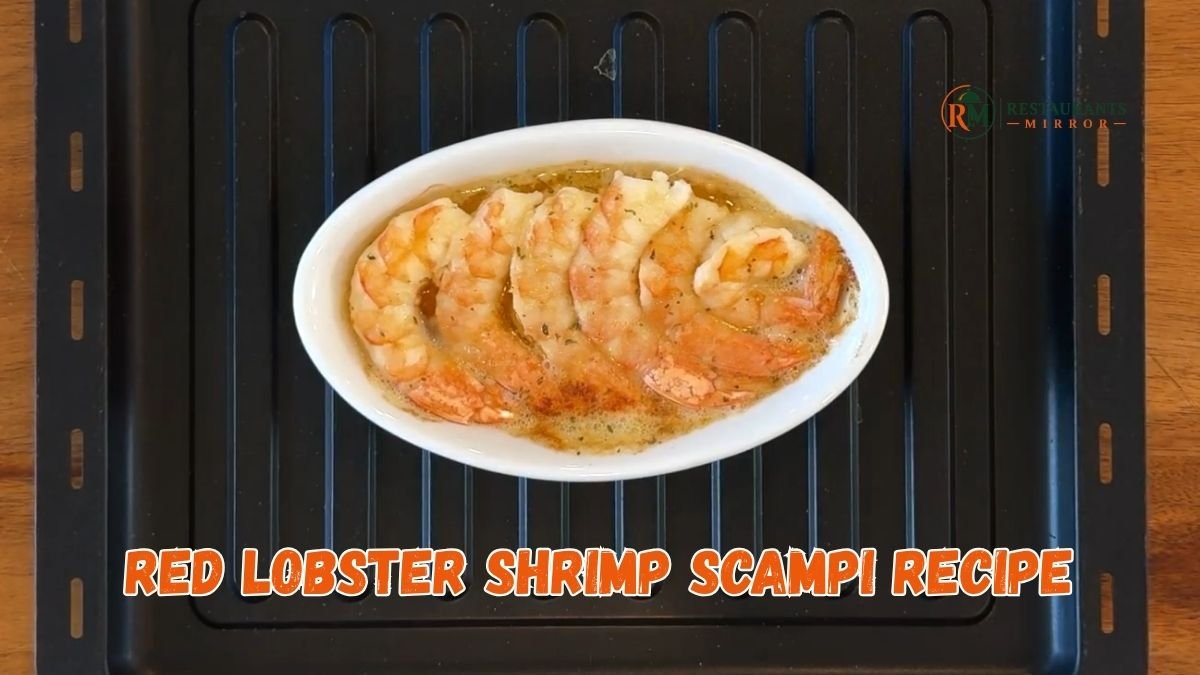
- Bake on the middle rack for 7 minutes. The shrimp turn pink and curl, and the butter bubbles at the edges. Around minute 5, the kitchen smells of toasted garlic.
- Move the rack to about 6 inches under the broiler. Switch to broil and watch for 2 to 3 minutes. Pull the dish when the top browns in spots. On one test, the top rack scorched the garlic within 90 seconds. Dropping the rack fixed it.
- Let the dish rest for 2 minutes. The butter settles, and the shrimp finish cooking from carryover heat. Squeeze a lemon wedge over the top and serve. Done shrimp curl into a loose C and look opaque to the center. A tight O means overcooked.
Notes
Dry shrimp are the key to a thick, clingy sauce. Done shrimp curl into a loose C, while a tight O means overcooked.